
Glass Work in Construction
Glass is a versatile and widely used material in modern construction, appreciated for its aesthetic appeal, transparency, and functional properties. Here’s a detailed look at glass work in construction:
Types of Glass
Float Glass:
- Standard flat glass.
- Used for windows, doors, and facades.
Tempered Glass:
- Heat-treated to enhance strength.
- Breaks into small, less harmful pieces.
- Used for doors, windows, and areas requiring safety glass.
Laminated Glass:
- Consists of two or more layers of glass with an interlayer of polyvinyl butyral (PVB).
- High safety as it holds together when shattered.
- Used for skylights, curtain walls, and floors.
Insulated Glass Units (IGUs):
- Two or more glass panes separated by a spacer and sealed.
- Provides better thermal and acoustic insulation.
- Used in windows and facades for energy efficiency.
Frosted and Tinted Glass:
- Frosted: Achieved by sandblasting or acid etching for privacy.
- Tinted: Coloured glass for reducing glare and solar heat gain.
- Used for partitions, doors, and decorative features.
Applications of Glass
Windows and Doors:
- Provide natural light, views, and ventilation.
- Energy-efficient glazing can improve insulation.
Curtain Walls:
- Non-structural outer covering of buildings.
- Provides aesthetic appeal and weather protection.
Skylights and Roof Glazing:
- Allows natural light into interior spaces.
- Can be fixed or operable for ventilation.
Interior Partitions and Doors:
- Creates open, light-filled spaces.
- Often used in office buildings and modern homes.
Balustrades and Railings:
- Frameless or with minimal framing for a modern look.
- Enhances views and adds safety.
Flooring and Stair Treads:
- Laminated or toughened glass for strength and safety.
- Adds a contemporary look and allows light to pass through levels.
Stainless Steel (S.S) Railings
Stainless steel railings are a popular choice in both residential and commercial buildings due to their durability, sleek appearance, and low maintenance. Here’s an overview of S.S steel railings:
Properties of Stainless Steel
Corrosion Resistance:
- Contains chromium, which forms a passive layer protecting against rust and corrosion.
- Suitable for both indoor and outdoor applications.
Strength and Durability:
- High tensile strength.
- Long-lasting and resistant to wear and tear.
Aesthetic Appeal:
- Sleek, modern appearance.
- Can be polished to various finishes (satin, mirror, brushed).
Maintenance:
- Low maintenance; easy to clean.
- Resistant to stains and requires no painting or sealing.
Types of Stainless Steel Used
Grade 304:
- Most common grade used in railings.
- Good corrosion resistance and formability.
- Suitable for indoor and mild outdoor environments.
Grade 316:
- Higher corrosion resistance due to molybdenum content.
- Ideal for harsh environments like coastal areas and industrial applications.
Components of Stainless Steel Railings
Posts:
- Vertical supports fixed to the floor, wall, or side of stairs.
- Provide structural support for the railing system.
Handrails:
- Horizontal or inclined bars for holding.
- Can be round, square, or rectangular in cross-section.
Balusters (or Spindles):
- Vertical bars or rods between the posts and handrail.
- Provide safety and stability.
Base Plates and Fittings:
- Connectors, brackets, and flanges used to secure components together.
- Ensure stability and alignment.
Design and Installation
Design Options:
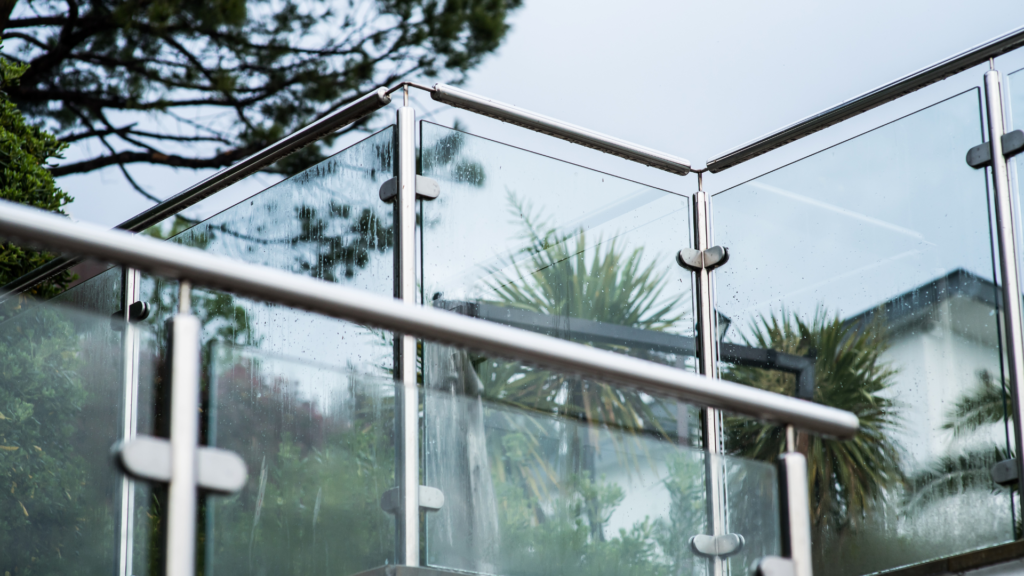
- Frameless Glass Railings with S.S Clamps: Combines glass panels with stainless steel clamps for a minimalistic look.
- Cable Railings: Use of horizontal stainless steel cables for a modern, industrial look.
- Horizontal or Vertical Bar Railings: Traditional design with either vertical or horizontal bars.
- Custom Designs: Incorporating curves, patterns, and mixed materials like wood or glass.
Installation:
- Accurate measurement and alignment are crucial.
- Proper anchoring and secure fittings ensure safety and stability.
- Professional installation recommended for best results and compliance with safety standards.
Combining Glass and Stainless Steel
Combining glass and stainless steel in railings and other architectural features creates a modern, sophisticated look. Benefits include:
- Transparency: Glass maintains openness and views, while stainless steel adds structural support.
- Durability: Both materials offer long-lasting performance with minimal maintenance.
- Aesthetic Appeal: The sleekness of stainless steel complements the transparency and elegance of glass.
In summary, glass work and stainless steel railings are integral to contemporary construction, providing a blend of functionality, safety, and aesthetic appeal. Their combined use enhances the modern architectural design while ensuring durability and low maintenance.